Minimalist bedrooms create serene spaces by cutting clutter and focusing on quality over quantity – a few well-chosen pieces, a neutral palette, and clean lines do the trick.
The trick is adding warmth with natural materials and texture so the room feels intentional and peaceful, not stark or unfinished.
1. Try a Soft Approach

Minimalist design is all about practical layouts and essential items, but that doesn’t mean you need sleek furnishings or sharp lines. A softer approach can work just as well.
This example keeps the number of decorations and furniture low, but leans into comforting, gentle shapes – the result is a timeless minimalist look. The beige tones and warm glow from the bedside lamps create a soft, tranquil feel.
2. Thoughtful Additions

Above all, a minimalist approach means bringing in only useful items. This cuts down on clutter and makes sure every piece adds aesthetic value.
In this room, everything from the books to the portraits and plants boosts visual interest. The plant pots are made from natural materials, which supports the organic theme.
3. Drop the Headboard and Footrest

A headboard might seem like a must-have for your bed, but going without is a great move for minimalist style. Removing the headboard and footrest cuts clutter and adds a unique feature to your bedroom.
This room features simple bed designs paired with houseplants, and the bright, warm light makes the space feel larger.
4. Try some Warm Finishes

Neutral, soft shades are common in minimalist bedrooms, but warm tones can have a similar effect. You just need to pick colors that work together and balance them with lighter shades.
This design blends rich brown hues with crisp white linen, creating a cozy, peaceful space. Curtain walls let in plenty of natural light, making the room feel more open.
5. Think Boho Aesthetics

Boho style pairs perfectly with minimalist looks, giving you open, lively spaces. It’s all about using natural fibers like linen, voile, and other woven fabrics with great textures.
Neutral colors help tie it together.
This design brings in those elements – you can see it in the rug, the linen on the bed, and the natural wood of the bedside bench and drawer. Light fabrics make the room feel more inviting, and indoor plants add visual interest.
6. Adopt a Floating Design

Floating elements are a hallmark of modern minimalist designs. They add a hint of intrigue that makes you want to explore the space.
Here, the bed and bedside table both use this look.
Earthy colors throughout the room create a calm, relaxing vibe, while plenty of natural light keeps things bright. The clutter-free space reinforces the clean, minimalistic theme.
7. Add Visual Interest with Unique Patterns

Minimalism doesn’t have to mean plain colors. You can make your room more engaging by adding unique patterns to certain pieces. In this bedroom, the rug has a distinctive cultural pattern, and the throw pillows on the bed follow suit.
Earthy, neutral colors keep those patterns as the main focal point, and the symmetrical layout gives the space a more organized feel.
8. Go for a Monochromatic Look

A streamlined monochromatic look in the bedroom creates a peaceful atmosphere and makes clutter easy to spot. Here, the room uses a white color scheme – you see it in the bedding, lampshade, and wall paint.
Except for the wooden bed, the paint above the headboard, and subtle black accents on the bedside lamp and shade, everything else stays white. This gives the room a unified look and bounces light around.
9. Add Easy to Maintain Houseplants

If you love plants, adding a few favorites to your bedroom brings a calm mood and helps purify the air. This bedroom is filled with different houseplants that boost visual appeal.
Ample natural light keeps them easy to care for. A horizontal display of paintings on the floor adds extra visual interest.
The pallet bed fits right in with the room’s aesthetic and gives it an artistic edge.
10. Concealed Storage

Cutting clutter is a big goal for a minimalist bedroom, but you still need storage – where else would you put dirty laundry? A hidden storage solution keeps things neatly tucked away so they don’t mess up the clean look.
This bedroom uses concealed storage under the bed for laundry baskets and even books. With enough compartments, you can store all kinds of items this way.
11. Free Space with Built-In Storage

Another smart way to cut bedroom clutter is by using built-in storage solutions. Think built-in shelves or cabinets.
Here, built-in cabinets are the main storage option, blending seamlessly into the room’s design. Floating bedside tables offer extra storage too.
The balanced layout and neutral earthy tones give the room a calm, peaceful feel.
12. Be Frugal with Décor

One key rule of minimalist decor: less is always more. Too many decor pieces make a space feel crowded.
Pick one or two focal points that match your style to define the room and keep it clutter-free. Here, a distinctive wall art piece adds a bit of mystery.
The extra ambient lighting makes it cozy and welcoming.
13. Bring in the Light

Cutting clutter is key for a clean, open space, but letting in plenty of light works just as well. Here, the minimalist look comes from welcoming light through multiple windows.
Bright walls help spread the light around, making the room feel larger and more expansive. A multicolored rug and flower vases on the bedside table add visual interest.
14. Dark Shades Work Too

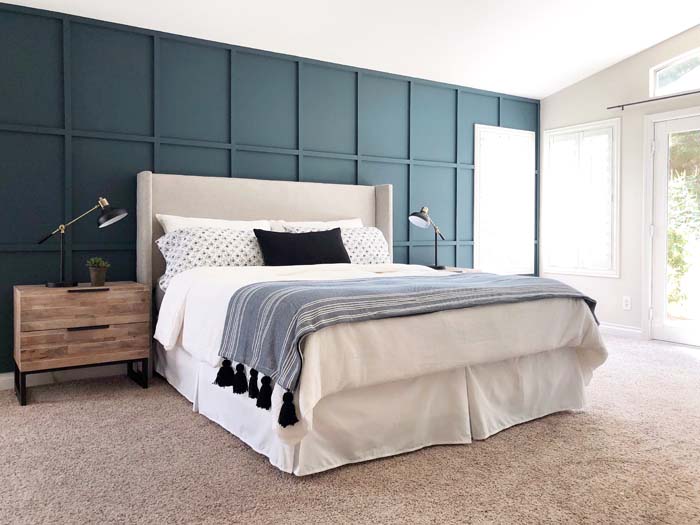
Light colors are popular in bedrooms because they reflect light. But too much brightness can feel harsh and make a space seem stark.
An easy way to add an accent wall is by painting one wall a dark shade to contrast the rest of the brightness. Here, the dark gray accent wall becomes the room’s focal point, offering a subtle contrast to the lighter hues.
Mirrors on the accent wall reflect light and add artistic flair.
15. Try a Classical Look

As they say, “old is gold” – some classic bedroom designs never go out of style. This traditional bedroom uses white, beige, and natural wood accents to create a compact, inviting space.
Houseplants add visual interest, and plenty of natural light makes the room feel bigger. Wall art in the same colors as the room ties everything together.
16. Use Subtle Patterns

Minimalism is about creating functional spaces without flashy extras. Rugs, throw blankets, and curtains can do the job, but a subtle pattern adds an extra layer of visual interest.
Patterns like marble or wood grain create a focal point and contrast with different textures. Here, the bed’s unique pattern and wall decor make the space visually and physically engaging.
17. Mix White and Wood

One solid way to emphasize different shades in your bedroom is by using contrast. And you don’t need bright colors for that – neutral and earthy tones work great.
In this bedroom, dark brown wood stands out against the white, and the bed highlights the room’s simple elegance. Hanging bedside lamps add a unique touch, while the plant vase adds visual appeal and calm.
18. Embrace Symmetry

An even stronger way to design a minimalist bedroom is through symmetry. Once you’ve cleared the clutter and chosen the right furniture, a touch of balance makes the room feel more structured.
This bedroom has identical side tables on each side of the bed and a large statement wall art piece in the center – a perfectly balanced design.
19. Add Storage Drawers

Keeping things out of sight is crucial for a minimalist look. The best approach is hidden storage that’s still easy to reach, so you can store important items and keep the space tidy.
Here, the bed has built-in drawers for clothes, books, and laundry – keeping the area clutter-free at all times.
20. Combine Brown and White Accents

Neutral shades like white and brown blend to create a calm, peaceful atmosphere – perfect for minimalist design. Neither color dominates, so they contrast and complement each other easily.
This bedroom’s brown furniture and decor pair well with white linen bedding, giving off a natural vibe with a touch of bohemian style.
21. Create Graphic Accents

Focal points don’t have to come from accent walls or a single statement piece. Creative graphic designs can add visual interest too.
This light gray bedroom uses darker gray shades to form bold graphic lines that catch the eye, while still working with the rest of the room – like the bed’s headboard. The hanging houseplant makes this design stand out, even with its simplicity.
22. Organized Chaos

Besides neat storage, another way to cut bedroom clutter is by improving organization. Arranging your room gets a lot easier when you know exactly where everything goes.
The items you bring in can also double as decorative focal points. In this design, shelves and cabinets keep things organized, and most items serve both a functional and aesthetic purpose.
23. Go for a Natural Look

One of the most appealing minimalist styles is bohemian. It focuses on natural materials, open spaces, and carefully chosen additions.
Here, natural wood and fabrics are used for the bed and rug, creating a simple, practical space. Abundant natural light makes the room feel more open.
Houseplants reinforce the organic theme and atmosphere.
24. Use a Mirror

An old trick to make any space look bigger is adding a mirror. Mirrors bounce light around, brighten the room, and create the illusion of more space through reflections.
In this room, a single large mirror is installed for both function and style. Shelved storage helps cut clutter and makes a distinctive accent wall that adds visual interest.
25. Explore Earthy Tones

Earthy tones have a calming effect that’s hard to beat in minimalist bedrooms. This design mixes several earthy shades with white, creating a peaceful, soothing atmosphere – perfect for winding down after a long day.
Instead of curtains for the small window, roller blinds are used – they take up much less room. The contrast between dark and bright colors highlights the beauty of the minimal accents.
26. Balance Warm and Neutral Tones

A calming bedroom isn’t limited to earthy tones – mixing warm and neutral colors works too. This bedroom blends warm brown with jungle green and white, striking a perfect balance between warm, neutral, and light tones.
The contrast between these shades makes each color stand out even more.